Table of contents
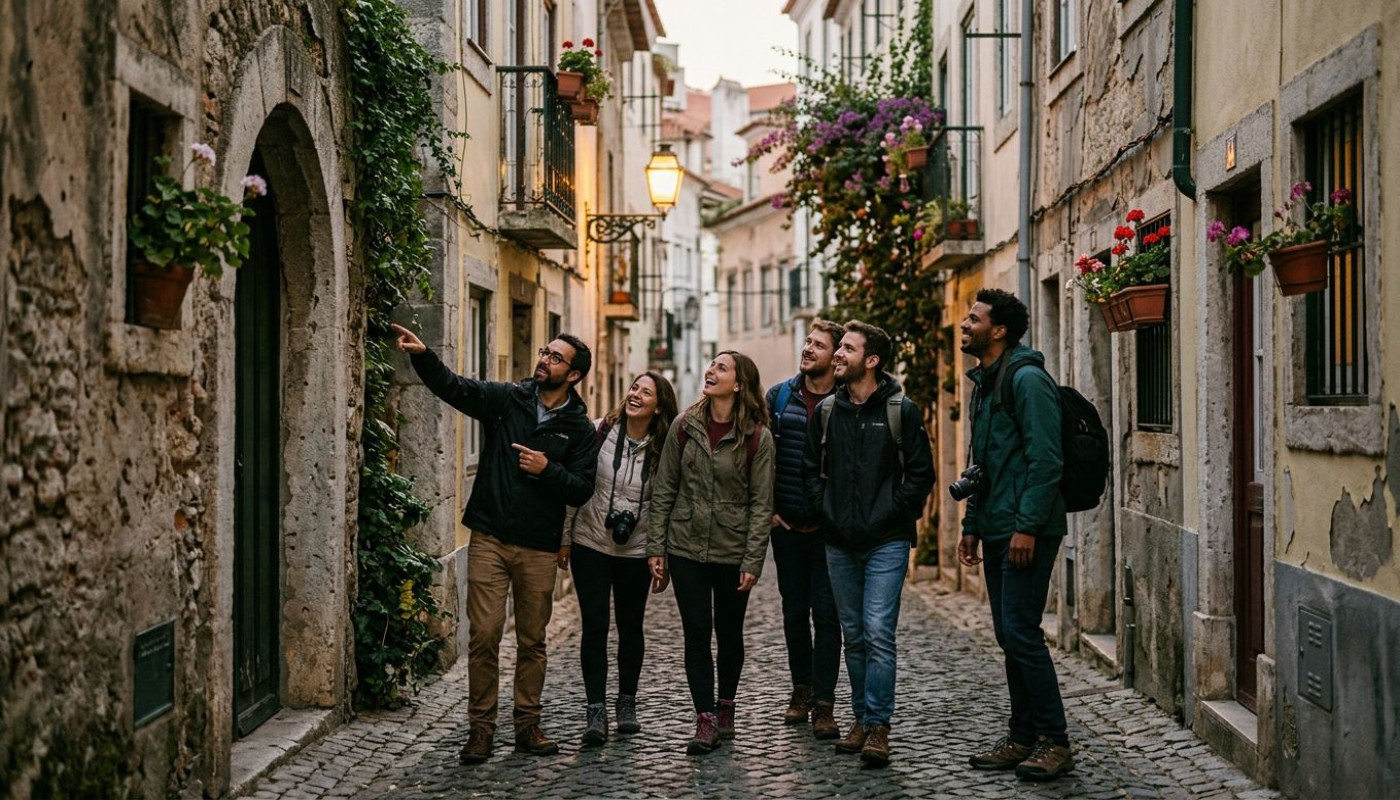
In an era when overtourism pushes cities to regulate crowds and travelers to hunt for “authentic” experiences, the humble walking tour has quietly evolved. Across Europe and North America, a new wave of so called hidden walking tours is reshaping the visitor economy, steering people away from headline monuments and into backstreets, micro-neighborhoods, and overlooked histories. The promise is simple, yet potent: less spectacle, more story, and a destination that feels newly discovered.
Why the best stories hide in plain sight
Can a city still surprise you? Increasingly, the answer depends less on where you go than on how you are guided, and walking tours built around hidden narratives are thriving because they treat the destination like a living newsroom, not a checklist. Traditional sightseeing has long followed a predictable arc, one that funnels visitors toward the same landmarks and the same photo angles, but the “hidden” format flips the hierarchy, elevating side streets, small businesses, and personal testimony into the main event. It is an approach that mirrors what urban researchers have been documenting for years: tourism concentrates fast. Even before the pandemic, the OECD noted that in many destinations, visitors cluster in a handful of districts, creating pressure on housing, transport, and public space, while leaving other neighborhoods economically sidelined.
Hidden walking tours respond to that imbalance by redesigning the map of attention, and the shift is not just aesthetic, it can be measurable. When itineraries move foot traffic from one saturated corridor to several smaller ones, spending disperses too, supporting cafés, galleries, bakeries, and independent shops that rarely benefit from mass flows. This is why city authorities have begun to talk openly about “visitor dispersion” as a policy goal, from Amsterdam’s efforts to redirect travelers beyond the historic core to Barcelona’s attempts to reduce strain on its most visited zones. A well-crafted hidden walk does not pretend the famous sites do not exist; instead, it builds context around them, sometimes from the perspective of labor, migration, climate, architecture, or local folklore, and that context tends to linger longer than a snapshot.
There is also a psychological hook. Behavioral science has repeatedly shown that novelty and a sense of discovery heighten memory, and walking tours that feel like investigative reporting, where the guide reveals a city through anecdotes, archival details, and sensory cues, can deliver that “I was there” imprint far more effectively than a bus loop. Add to that the social element, small groups, live questions, spontaneous detours, and you get a format that competes with algorithms: human curation, in real time, tailored to what the street is doing that day.
When a walk becomes a local investigation
Forget the brochure voice. The strongest hidden walking tours are structured like an investigation, they begin with a puzzle, follow clues through the built environment, and end with a reframing of what the traveler thought they knew. Why does this block look older than the one beside it? Which industry paid for that façade, and which community was pushed out? Who owns the view? These are not academic questions when you are standing on the pavement, and they are precisely the questions that make a destination feel textured, political, and alive.
Done well, the method draws on a mix of sources: municipal history, oral testimony, architecture, and even the economics of everyday life. Many guides now cite planning decisions, demographic shifts, and small historical ruptures, a fire, a strike, a new harbor, a boom in speculative real estate, and they connect those ruptures to what visitors can see and hear in the present. It is the difference between being told that a neighborhood is “trendy” and understanding how it became that way, who benefited, who paid the price, and why the storefronts look the way they do. In cities where tourism and housing collide, this kind of grounded storytelling can also nudge travelers toward more ethical choices, encouraging them to spend locally and to treat residential streets as homes first, attractions second.
The investigative feel is also practical. Walking remains one of the most accessible ways to experience a city, requiring little equipment and scaling to different budgets, and when guides take guests off the obvious routes, they often improve the experience logistically, avoiding bottlenecks, noise, and queues. In peak season, that matters, because a destination can be “beautiful” and still be exhausting. Hidden tours often trade the biggest sights for better pacing, more shade, more stops, and more conversation, which is why they can appeal not only to first timers but also to repeat visitors who want a deeper cut.
For travelers eyeing Iceland, where weather, daylight, and terrain shape the day as much as any museum schedule, walking with a local lens can be especially revealing, and for those planning a trip and weighing what to book, information and options are centralized on https://www.reykjavik-trip.com/, a starting point to compare experiences and build an itinerary that favors narrative over noise.
The economics behind “hidden” experiences
Look closer: the “hidden” label is not only about romance. It also reflects a major shift in tourism economics, where experiences have become a primary product, not an add-on. The World Travel & Tourism Council has repeatedly highlighted the sector’s outsized role in employment and GDP in many countries, and within that vast ecosystem, tours and activities have become a high-growth segment, propelled by mobile booking, review platforms, and travelers who prioritize time-efficient planning. That demand has consequences: it rewards operators who can differentiate, and “hidden” is differentiation with a story attached.
For destinations, the upside can be meaningful. Smaller group experiences can increase per-visitor yield, the amount a traveler spends locally, without increasing raw numbers, a key objective for places trying to balance revenue with quality of life. That is why policymakers often talk about value over volume, and why you see more licensing discussions, visitor taxes, and crowd management tools, all attempts to keep cities livable while keeping tourism viable. Hidden walking tours align with that direction: they tend to be lower impact than large vehicle-based excursions, they can run year-round with minimal infrastructure, and they spread attention across more streets and more businesses.
But the economics also explain the risks. When “hidden” becomes a marketing cliché, neighborhoods can be branded into exposure, and exposure can morph into displacement if it accelerates rent pressure and short-term letting. Cities have started reacting. Across Europe, municipalities have tightened rules on vacation rentals, and in some places, officials have limited group sizes or required permits for guided tours, especially in sensitive historic centers. Those regulations are not anti-tourism as much as pro-balance, and they signal that the next phase of travel will reward operators who collaborate with communities, respect noise and congestion, and offer experiences that do not treat residents as background scenery.
For travelers, the economic question is more personal: what are you actually paying for? The best hidden walks price in research time, route testing, weather contingencies, and the human labor of storytelling. In return, they can save you money elsewhere by preventing costly mistakes, steering you away from overpriced traps, and helping you prioritize what is genuinely worth your limited hours. In that sense, a walking tour can function like a local editor, cutting the fluff and elevating the stories that matter.
How to choose a tour worth your time
So how do you separate a real hidden gem from a recycled script? Start with specificity. Credible tours are transparent about their focus, whether that is foodways, postwar architecture, street art, labor history, folklore, or contemporary politics, and they describe what you will do, not just what you will “discover.” Look for practical signals too: group size caps, route length, accessibility notes, and weather policies. The best operators treat those details as part of the experience, because comfort and safety are not extras when you are walking for two or three hours in a city that may shift from sun to rain in minutes.
Next, read reviews like a reporter. Ignore the generic praise and scan for evidence: do people mention learning something they could not have found on a plaque, meeting a guide who adapted to questions, or visiting places they would not have entered alone? Watch for red flags as well, pressured shopping stops, inflated “secret” claims, or a route that is hidden only because it avoids the hard work of interpretation. A strong tour earns trust by grounding its anecdotes, naming sources when possible, and admitting uncertainty when history is contested. That honesty tends to be memorable, and it respects the visitor’s intelligence.
Timing matters. Morning walks can capture a city before it fills up, while late-afternoon tours can catch the transition from day crowds to local evening rhythms, and in high latitude destinations, seasonal light can transform what you see. Consider your own travel style too. If you want context before you roam, book early in your trip; if you want synthesis, take a tour later, when you can bring your own observations and test them against a local narrative. Either way, the hidden format works best when it is not treated as a single “activity,” but as a lens that changes how you experience everything else.
Finally, budget realistically. Expect to pay more for smaller groups and specialized expertise, and factor in tips where customary, plus comfortable footwear, layers, and time buffers for café stops or unexpected detours. If you are traveling with kids, seniors, or anyone with mobility constraints, look for clear accessibility information, because a tour that is “hidden” can also mean stairs, uneven pavement, or longer distances than a standard downtown loop.
Plan, book, and keep it simple
To turn a destination into an adventure, book early during peak dates, keep your schedule breathable, and set aside budget for one high-quality walk plus a few self-guided hours inspired by what you learn. Check refund policies, weather contingencies, and meeting points, and in some countries, look for discounts via city passes or seasonal offers; when in doubt, prioritize small groups and clear itineraries.
Similar
Why Asking Locals Changes Your Entire Itinerary

Mapping Memories: How Combining Excursions And Local Guides Reshapes Your Journey

Unexpected Questions Every Traveler Should Ask Before Planning A Trip
Real Travelers Confess: The Worst Travel Advice We Actually Followed